Recycling and Sustainability for Landscaping Yeading
 At Landscaping Yeading, sustainability is treated as part of everyday site practice, not an optional extra. From the first sweep-up to the final clearance, our aim is to reduce waste, recover useful materials, and keep as much as possible out of landfill. A modern Yeading landscaping service can support greener streets, smarter gardens, and better outcomes for local communities by making responsible recycling choices at every stage of a project.
Our landscaping in Yeading approach focuses on sorting, reusing, and diverting waste wherever it is practical to do so. That includes soil recovery, timber segregation, green waste processing, and separating inert materials from mixed loads. We work with a clear recycling target: at least 90% of non-hazardous site waste will be diverted from landfill, with an ongoing drive to improve that figure through better segregation and cleaner material streams.
In practical terms, this means that a typical garden clearance or hard landscaping project can generate multiple recyclable waste types, each handled differently. Tree cuttings and hedge trimmings may be sent for composting or biomass use, broken concrete and paving can be separated for aggregate recovery, and metal offcuts can be routed into standard scrap-metal streams. By keeping materials distinct from the start, recycling for Landscaping Yeading becomes more efficient and less carbon intensive.
 Local disposal and sorting depend on well-established regional infrastructure, including nearby transfer stations and reuse facilities that serve the wider borough network. These sites help reduce the distance waste travels and make it easier to direct material into the right stream. For a Yeading landscaping company, using authorised transfer stations supports traceability and ensures loads are assessed properly before onward recycling or recovery.
We also take a borough-aware approach to waste separation. In areas where local authority collections encourage stricter sorting of garden waste, mixed recyclables, and residual rubbish, our teams mirror that discipline on site. That means separating soil from rubble, keeping plastics away from green waste, and avoiding contamination that can downgrade the quality of recovered material. This is especially important in dense urban settings where recycling systems depend on clean, well-sorted inputs.
Our process includes an emphasis on reusing what already exists. Salvageable slabs, bricks, edging, timber sleepers, and decorative stone may be set aside for reuse in the same project or retained for future works. This approach lowers demand for new materials and cuts transport emissions linked to manufacturing. It also complements broader Landscaping Yeading recycling goals by prioritising circular use over disposal.
 Partnerships with charities form another important strand of our sustainability work. When suitable items are removed from gardens or outdoor spaces, we look for opportunities to pass them on to local good causes rather than treating them as waste. Items such as planters, benches, tools, pots, wheelbarrows, and usable outdoor furniture may be donated where appropriate, helping community groups benefit from materials that still have useful life left in them.
These charitable partnerships support both social value and environmental responsibility. A donated item can extend its service life by months or years, reducing the need for replacement production and avoiding unnecessary disposal. For Yeading landscaping services, this is a simple but effective way to combine practical site clearance with community-minded reuse. It is also a reminder that sustainability is not only about recycling plants and rubble, but about managing every item with care.
We also make use of low-carbon vans to reduce emissions during transport between jobs, transfer stations, and reuse partners. Modern efficient vehicles, better route planning, and fewer unnecessary trips all help keep fuel use down. For a busy Landscaping Yeading operation, transport can be a major source of emissions, so low-carbon vans play a meaningful role in reducing the overall footprint of landscaping and clearance work across the area.
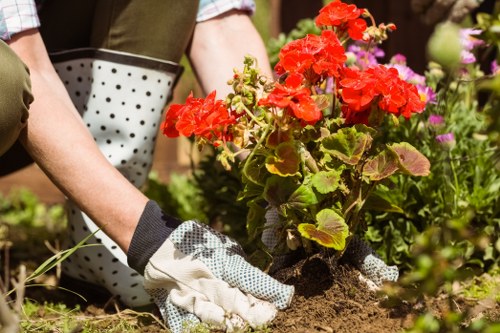 Our sustainability practices also extend to the handling of green waste generated by routine maintenance and full redesigns. Grass cuttings, leaves, twigs, hedge trimmings, and plant material are kept separate where possible so they can move through composting or organic recovery channels. This is particularly relevant in neighbourhoods where councils place strong emphasis on garden-waste separation, as clean green waste is far easier to recycle into useful outputs such as compost or soil improver.
Another important area is soil management. Excavated topsoil is often screened and retained for reuse when it is suitable, instead of being automatically removed and replaced. This reduces haulage, avoids purchasing new imported soil, and supports lower-carbon project delivery. Where mixed soils contain stones or roots, we sort them carefully so recoverable material can still be channelled into the correct outlet rather than being discarded as general waste.
By combining sorting, reuse, donation, and efficient transport, recycling for landscaping in Yeading becomes a practical system rather than a slogan. Each decision, from the vehicle used to the waste stream selected, contributes to a more sustainable service. This is particularly valuable in an area where landscaping must balance compact residential spaces, busy roads, and strong environmental expectations from local communities and borough operations.
 Looking ahead, our commitment remains focused on continuous improvement. We will keep raising recycling rates, strengthening charity partnerships, expanding low-carbon van use, and working with local transfer stations to ensure materials are managed responsibly. The goal is straightforward: deliver attractive outdoor spaces while reducing waste and cutting emissions wherever possible.
Landscaping Yeading should mean more than neat borders and well-kept lawns; it should also mean cleaner material flows, careful resource use, and a genuine contribution to sustainability. With better separation, smarter reuse, and a firm recycling target, our Yeading landscaping approach helps support a greener future for the area.